Panel evaluation, wiring improvement, or targeted repair: matching the fix to the electrical hazard
When something goes wrong with the electrical system in a home or business, the first instinct is often to call for a repair. But not every electrical problem is best solved by simply replacing a part. Sometimes the real issue is a design weakness, a code violation that has been there for years, or a panel that is no longer suited to the loads it serves. Knowing which kind of response fits the situation can save time, reduce risk, and prevent the same problem from coming back.
Three broad approaches exist: a targeted repair that fixes a specific fault; a wiring improvement that upgrades a circuit or a section of the system; and a panel evaluation that looks at the service panel itself. Each approach has its place, and the choice depends on what kind of hazard is present and how deeply it runs through the system. Understanding the difference helps a property owner ask the right questions when an electrician arrives.
When a targeted repair makes sense
A targeted repair is the right move when the problem is localised and the rest of the system is in decent shape. For example, a single outlet that stopped working, a light fixture that flickers, or a switch that feels hot to the touch. In these cases the fault is probably in that device or the short run of wire feeding it. Replacing the switch, tightening a loose connection, or installing a new outlet often resolves the issue without touching anything else.
Targeted repairs are also appropriate for visible damage. If a power cord has frayed insulation, or a receptacle has cracked from heat, swapping that component is straightforward. The same goes for a breaker that trips repeatedly on the same circuit: the breaker itself may be worn out, or the circuit may simply be overloaded. A repair that replaces the breaker or redistributes the load can solve the symptom quickly.
But a targeted repair has limits. It does not address underlying problems like undersized wiring, a panel that lacks capacity, or circuits that were never wired properly in the first place. If the same outlet keeps failing, or the breaker still trips after being replaced, the issue is likely bigger than one component. In that case a repair alone is like patching a leaky pipe while ignoring the corrosion that caused it.
Wiring improvement for deeper issues
A wiring improvement goes beyond swapping a part. It means running new cable, updating a circuit to modern code, or adding a dedicated line for equipment that demands steady power. This approach is useful when the existing wiring is old, undersized, or damaged in a way that cannot be fixed by replacing an end device.
Homes built decades ago often have wiring that was adequate for the appliances of the time but struggles with today’s loads. A kitchen that was wired for a refrigerator and a few lights may now power a microwave, a dishwasher, a toaster, and a coffee maker all at once. The result is frequent breaker trips, overheating at the panel, and a persistent burning smell from the outlets. No amount of outlet replacement will fix that. The solution is to run a new circuit with heavier wire and a dedicated breaker.

Wiring improvement is also the answer when insulation has degraded. Older cloth-covered wiring can crack and shed insulation, leaving bare conductors that can arc. A repair that splices in a new piece may buy time, but the safer route is to replace the entire run. Similarly, wiring that was damaged by rodents or by a previous homeowner’s amateur work often has multiple faults along its length. Patching one spot leaves the next weak point ready to fail.
Another common scenario is a circuit that lacks a ground. Two-prong outlets are still found in many older buildings. Adding a ground wire to the whole circuit is an improvement that brings the system closer to modern safety standards. This is more work than a single outlet swap, but it addresses the root cause of the hazard.
Panel evaluation for capacity and safety
The service panel, sometimes called the breaker box, is the heart of the electrical system. A panel evaluation looks at the panel itself: its age, its capacity, the condition of the bus bars, the type of breakers installed, and whether it has room for future circuits. This evaluation is separate from inspecting individual branch circuits, though a thorough electrician will do both.
Panel evaluation is critical when the panel is old, when it uses obsolete breakers, or when it shows signs of overheating. A panel that has scorch marks, a smell of hot plastic, or rust inside the enclosure needs attention. Sometimes the panel is simply too small for the number of circuits the building now needs. Adding more breakers by using tandem or double-stuff breakers can work in some panels, but it can also push the panel beyond its designed capacity, leading to nuisance tripping and heat buildup.
Another reason for a panel evaluation is a planned addition or major appliance installation. Before adding a new circuit for an electric vehicle charger, a heat pump, or a home workshop, the panel must be checked to see if it can handle the extra load. If the panel is full or its rating is too low, the evaluation may lead to a panel upgrade instead of a simple circuit addition.
A careful panel evaluation also looks for arc fault risks. Loose connections at the breaker terminals, damaged bus bars, or corrosion can create conditions that lead to an electrical spark inside the panel. This is a serious fire hazard because the panel is often tucked away in a basement, garage, or utility closet where a small arc can go unnoticed until it ignites nearby material. A qualified electrician who performs a qualified evaluation of unsafe wiring will catch these hidden issues before they escalate.
It is worth noting that a panel evaluation does not always end with a recommendation to replace the panel. Sometimes the panel is fine and the problem is a single weak breaker or a loose connection that can be tightened. The value of the evaluation is that it separates the panel’s condition from the condition of the wiring beyond it. That distinction guides the next step.
How to decide which approach fits
Choosing between repair, wiring improvement, and panel evaluation depends on the nature of the hazard and the history of the system. A few practical questions can help narrow the options.
Is the problem limited to one device or outlet, and does the rest of the system work normally? If yes, a targeted repair is probably sufficient. Replace the faulty component and test the circuit. If the problem returns, move up to a wiring improvement.
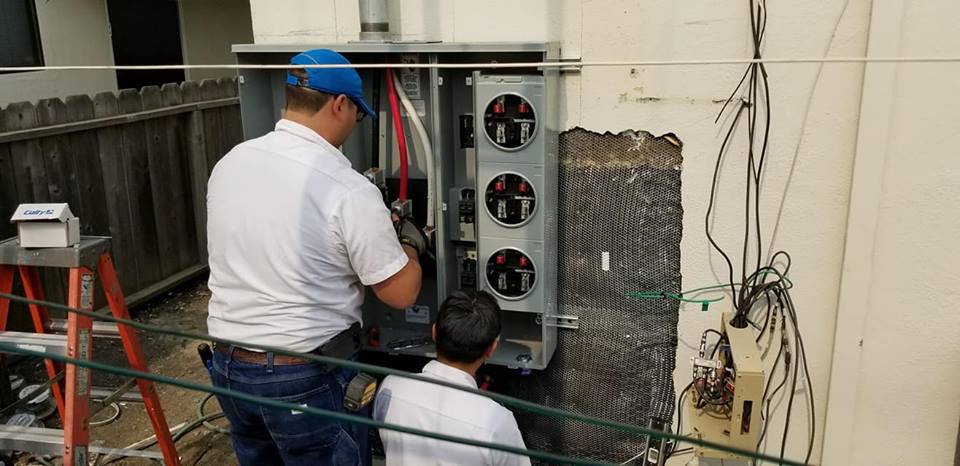
Are there multiple symptoms in the same area? Flickering lights, warm outlets, and a breaker that trips randomly on the same circuit suggest a wiring problem deeper than a single component. In that case a wiring improvement is the better choice. Running new cable or adding a dedicated circuit removes the underlying cause.
Does the panel show signs of age or damage? Rust, scorching, a burning smell near the panel, or breakers that feel loose are red flags. A panel evaluation is the logical first step. It will reveal whether the panel itself is safe or needs replacement, and it will guide any subsequent work on the circuits.
Is a major load being added? Before installing a high-draw appliance or upgrading an electrical system, a panel evaluation is essential. It determines whether the existing panel has the capacity and the space. If not, a panel upgrade becomes part of the project.
There is no one-size-fits-all answer. A house with minor nuisance tripping may only need a repair. A house with old cloth wiring and no ground likely needs a wiring improvement. A house with a rusted panel from the 1960s needs a panel evaluation before anything else. The key is to match the work to the hazard rather than defaulting to the cheapest or quickest fix.
Recognising warning signs that call for professional attention
Some signs are easy to miss. A faint burning smell near an outlet, a switch that feels warm to the touch, or a breaker that hums before it trips. These are not normal. They indicate that something inside the system is overheating, arcing, or carrying current it was not designed for. Ignoring them because the device still works is a gamble.
Other signs are more dramatic. An electrical spark visible at an outlet or inside the panel, smoke coming from a wall switch, or a breaker that will not stay reset. These demand immediate action. Turn off the affected circuit at the panel if it is safe to do so, and call a qualified electrician. Do not use the circuit again until it has been inspected.
An arc fault is particularly dangerous because it can happen inside a wall or in a junction box where no one sees it. Arc fault circuit interrupters (AFCIs) are now required in many new installations because they detect the unique electrical signature of an arc and shut off power before the arc can start a fire. If a home has older wiring and no AFCIs, a wiring improvement that adds them can be a significant safety upgrade.
Smoke detectors near electrical panels or in rooms with older wiring are a sensible precaution. They are not a substitute for fixing the problem, but they provide an early warning if something goes wrong after hours. Emergency services should be called immediately if smoke or fire is present.

The value of a thorough assessment
A professional electrician does not just fix what is broken. They evaluate the system, identify the root cause, and recommend the approach that addresses it. That might be a simple repair, a wiring improvement, or a panel evaluation. In many cases the most cost-effective path is to start with a qualified evaluation of unsafe wiring so the work is guided by facts rather than guesses.
Attempting to decide the fix without a full picture often leads to repeated service calls, wasted money, and lingering risk. A targeted repair that should have been a wiring improvement leaves the circuit weak and prone to failure. A wiring improvement that should have started with a panel evaluation can overload an already marginal panel and create a new hazard. The sequence matters.
Electrical systems are complex and every building is different. The wiring in a 1920s bungalow is not the same as the wiring in a 1990s townhouse, and the panel in a commercial workshop is not the same as the panel in a single-family home. That is why the right answer is always to let the condition of the system dictate the work, not a preconceived idea of what the fix should be.
Understanding the difference between repair, wiring improvement, and panel evaluation puts a property owner in a better position to discuss the situation with an electrician. It helps them ask the right questions, understand the recommendations, and make informed decisions about the safety and reliability of their electrical system.